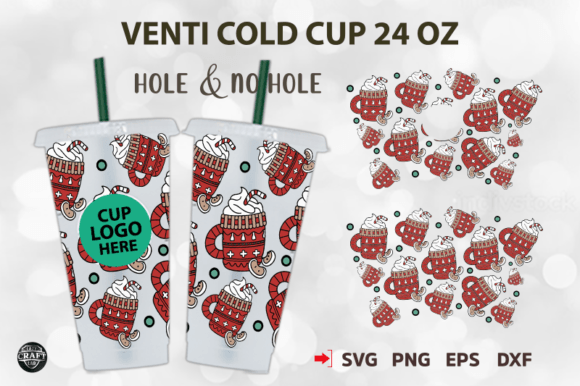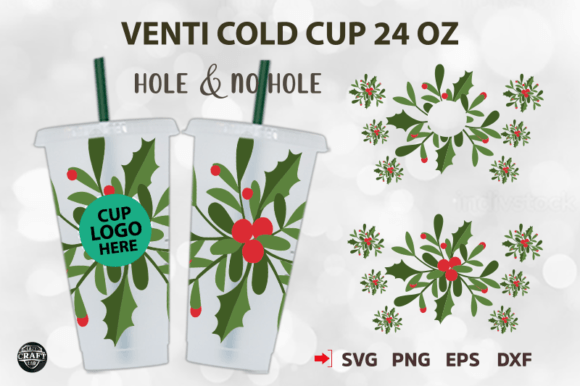
Mistletoe Christmas Venti Cold Cup 24oz
A Designer’s First Glance: Festive, Focused, and Fit for Function
When I opened the Mistletoe Christmas Venti Cold Cup 24oz file set—SVG, EPS, DXF, and PNG—I wasn’t looking for holiday cheer alone. I was assessing how this design would translate into real stitched texture on fabric: Would the mistletoe leaves hold crispness in satin stitch? Would the berries read clearly at 2.5 inches tall on a baby onesie? Would it scale cleanly for a boutique apron or an Etsy-listed embroidered tote bag? The answer starts with its intent: it’s a tumbler wrap, yes—but its clean silhouette, balanced negative space, and classic botanical motif make it unexpectedly versatile for embroidery projects beyond cups.
Where It Shines: Real Projects, Not Just Mockups
Last week, I prepped a small batch of holiday gifts for a local café owner—custom embroidered sweatshirts, tea towels, and matching aprons. I tested Mistletoe Christmas Venti Cold Cup 24oz as a chest emblem on a charcoal crewneck. Its centered composition and moderate width (no sprawling branches or thin trailing vines) kept registration tight in my 4x4 hoop. The mistletoe shape is generous but not overwhelming—ideal for sweatshirt embroidery where fill stitch density needs to stay breathable. On a linen tea towel, I resized it slightly smaller and used a light tear-away stabilizer; the leaf veins stayed legible, and the berry clusters didn’t “mush” under dense satin coverage.
It also worked beautifully as a standalone embroidered patch—heat-applied to denim jackets and canvas totes. Because the design avoids micro-details (no tiny stems, no overlapping layers), it stitches consistently across fabric types: medium-weight cotton, brushed poly-blend sweatshirt fleece, even lightweight chambray for baby embroidery. That simplicity isn’t a limitation—it’s intentional design discipline.
Where to Pause—and Why
This isn’t a one-size-fits-all embroidery file. If you’re planning Mistletoe Christmas Venti Cold Cup 24oz for caps or curved surfaces like baseball hats, test first on scrap fabric with your preferred cap frame. The shape is vertically oriented and moderately tall—so it may require slight vertical compression or repositioning to avoid distortion at the crown seam. Similarly, on stretchy fabrics like jersey tees or ribbed baby onesies, use cut-away stabilizer underneath and reduce top tension slightly to prevent puckering around the rounded leaf edges.
Dark fabric demands attention too. The PNG preview shows strong contrast, but in stitch, those small berry highlights rely on thread color choice—not built-in white underlay. I recommend stitching a sample in both black and ecru thread on navy cotton to confirm visibility. And while the design avoids ultra-thin lines, don’t push it below 1.75 inches wide for baby embroidery or detailed pillow covers—the center berry cluster does tighten visually at smaller scales.
Stitching Clarity Meets Commercial Sense
What makes Mistletoe Christmas Venti Cold Cup 24oz feel professional isn’t just aesthetics—it’s execution logic. There are no nested fills that trap thread or cause nesting issues in multi-color runs. No jagged vector edges that translate to skipped stitches on lower-end machines. As a machine embroidery design, it’s forgiving without being generic. That matters when you’re producing for Etsy: customers notice when berries look plump instead of pixelated, when leaf outlines stay smooth instead of stair-stepped.
For craft business owners, this design supports brand consistency. Use it across a holiday product line—tote bag design, sweatshirt embroidery, and embroidered patch sets—and it reads as part of a cohesive collection, not a mismatched clipart drop-in. Its tone is warm but polished, traditional but not fussy—ideal for handmade product listings where buyers scan quickly for authenticity and finish quality.
Practical Notes Every Embroiderer Should Check
- Test before committing: Run a full-stitch sample on scrap fabric matching your final project’s weight and texture.
- Review stitch density: Especially in the berry centers—dense fill can stiffen lightweight fabrics. Consider reducing density by 5–8% for baby embroidery or kitchen towels.
- Confirm hoop size compatibility: While the original tumbler wrap fits a 24oz Venti cold cup, embroidery scaling depends on your machine’s maximum hoop dimensions—check before resizing beyond 120%.
- Inspect small details: Zoom into the PNG and SVG previews—look for unintentional gaps or stray anchor points that could affect satin stitch flow.
- Compare backgrounds: View mockups in both light and dark fabric tones. This design relies on shape and contrast more than intricate shading—so ensure your thread colors support that.
- Stabilizer strategy: Medium-weight tear-away works for stable wovens; switch to cut-away for knits or textured fabrics like terry cloth.
- Licensing check: Since this is a digital embroidery file sold as a Graphics asset, verify permitted usage—especially if selling finished embroidered products commercially or bundling with other design assets.
Final Thought: A Quietly Confident Holiday Staple
Mistletoe Christmas Venti Cold Cup 24oz doesn’t shout. It doesn’t need to. In a season flooded with overwrought motifs and chaotic layouts, its quiet balance—rounded leaves, evenly spaced berries, clean vector lines—makes it a reliable workhorse for custom apparel, personalized gifts, and small shop merchandise. It feels handmade because it’s designed to be stitched, not just displayed. Whether you’re embroidering a holiday gift for a teacher, launching a limited-run boutique collection, or building repeatable digital embroidery files for your Etsy shop, this is the kind of design that earns trust—not through flash, but through thoughtful, stitch-ready function.