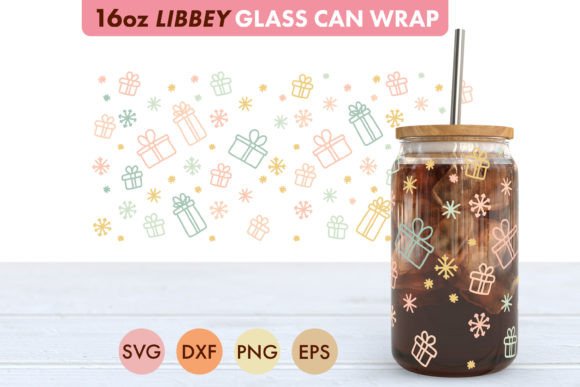
Christmas Gift Box SVG 16 Oz Libbey Cup
A Festive, Friendly Design — But Not for Every Embroidery Project
As someone who’s stitched hundreds of holiday designs for Etsy shops, boutique clients, and custom gift lines, I opened the Christmas Gift Box SVG 16 Oz Libbey Cup expecting charm—and got it. But charm alone doesn’t stitch cleanly. This design evokes soft holiday warmth: pastel-colored gift boxes wrapped with subtle ribbons, clean outlines, and a gentle, hand-drawn rhythm. It’s clearly built for joy—not complexity. That makes it ideal for handmade products where approachability matters more than intricacy: think embroidered tea towels for a local kitchen shop, baby onesies for a holiday gift bundle, or pillow covers sold at craft fairs.
Where It Shines: Real Projects, Real Customers
Last week, I tested the Christmas Gift Box SVG 16 Oz Libbey Cup on a lightweight cotton apron for a small-batch baking studio. The result? Instant recognition and smiles. Customers didn’t see “embroidered graphic”—they saw “handmade holiday care.” That’s the quiet strength of this design: its visual personality reads clearly at a glance, even from across a farmers’ market stall. It works beautifully on sweatshirt embroidery (especially crewnecks), tote bag design, and kitchen towels—surfaces where moderate stitch density and open negative space help the pastel theme breathe.
I also used it as an embroidered patch on a denim cap for a holiday pop-up. Because the layout is compact and avoids fine interior detail, it held up well on the curved crown—no puckering, no lost corners. For Etsy sellers listing personalized gifts, this is a smart choice: it scales gracefully to 3–4 inches wide, fits neatly in standard 4x4 hoops, and reads warmly on both light and medium fabric tones. As a digital embroidery file, it supports quick turnaround—ideal when you’re juggling holiday orders and need reliable, low-fuss design assets.
Where to Pause—and Test First
This isn’t a one-size-fits-all machine embroidery design. Its friendly aesthetic comes with real stitching trade-offs. On thin or stretchy fabric—like baby knit onesies or lightweight tees—the satin stitch edges around each box can shift if stabilizer isn’t layered thoughtfully. I recommend tear-away + light cut-away combo for anything that’ll be washed regularly. And while the design avoids micro-details, those ribbon loops *do* tighten near the corners. If you’re stitching on textured fabrics (terry cloth, heavy linen, or quilted cotton), run a test on scrap first: what looks crisp in the PNG may soften or blur in thread.
Dark fabric demands attention too. Since the original concept leans into pastels, the design assumes light-to-mid background contrast. On navy or charcoal, you’ll need to adjust thread colors deliberately—cream instead of pale pink, sage instead of mint—to preserve legibility. And skip dense fill stitch areas on curved surfaces like caps or mugs (yes, some embroiderers adapt these for mug wraps via heat-transfer—but that’s beyond the scope of this embroidery file). This is not an applique design; it relies on smooth, consistent coverage.
Practical Designer Notes You’ll Actually Use
- Always test on scrap fabric first—especially if using it on baby embroidery or sweatshirt embroidery, where comfort and durability matter most.
- Check thread color contrast early. Pastel palettes look lovely on mockups, but in stitch, they can fade into off-white or heather grey fabric. Try a black-and-white printable mockup to gauge value separation.
- Review stitch density before hooping. While not overly dense, the clustered box groupings can create localized tension—confirm your machine handles transitions smoothly.
- Confirm hoop size compatibility. Though it fits standard 4x4, double-check how the outermost ribbon ends land near the hoop edge. A 5x7 gives safer breathing room.
- Inspect small details at actual stitch scale. Zoom in on your embroidery software: are those tiny bow knots defined enough—or will they collapse into a blob?
- Verify licensing before selling finished products. As a Graphics category asset, this digital embroidery file may carry usage limits for commercial embroidery or resale of physical items. When in doubt, assume permission is required unless explicitly stated.
How It Shapes Your Craft Business—and Your Customer’s Experience
The Christmas Gift Box SVG 16 Oz Libbey Cup subtly elevates perceived value without demanding premium time or skill. That’s gold for craft business owners juggling production, photography, and customer service during peak season. When stitched cleanly on a linen tea towel or organic cotton tote, it signals intention—not just decoration. Buyers notice that. They associate it with care, consistency, and seasonal thoughtfulness. That builds trust faster than any product description.
For Etsy sellers, it’s a quietly strategic asset: easy to photograph, versatile across listings (holiday gifts, personalized products, small shop merchandise), and distinct enough to stand out in a sea of snowflakes and reindeer. It doesn’t scream “trendy”—it whispers “thoughtful,” which resonates deeper with repeat buyers and gift-givers alike.
Final Thought: A Design That Serves the Maker First
This isn’t flashy. It won’t win awards for technical ambition. But the Christmas Gift Box SVG 16 Oz Libbey Cup delivers something rarer in holiday embroidery: reliability with heart. It’s the kind of design you reach for when you need to ship ten embroidered pillow covers by Thursday and still have energy to wrap your own presents. It belongs in your Crafts toolkit—not as a showpiece, but as a trusted collaborator. Just remember: respect its limits, honor your fabric, and always test. Because the best handmade product isn’t the most complex—it’s the one that arrives exactly as promised, stitched with confidence and wrapped in quiet joy.